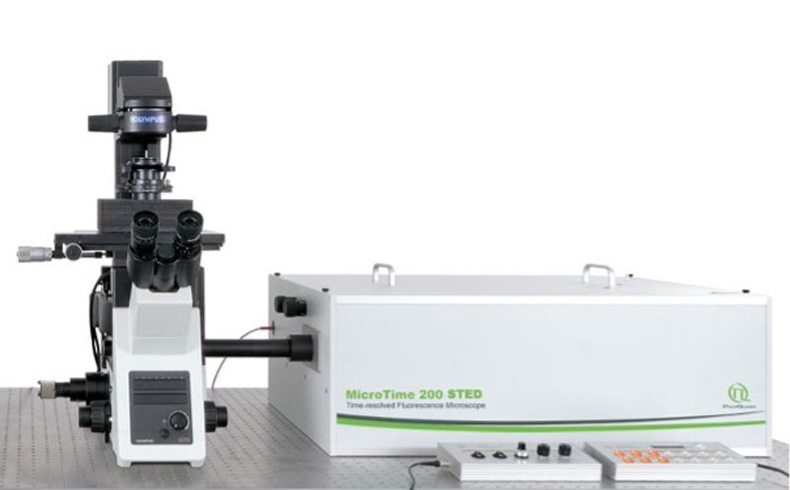
Researchers at the Centre for Advanced Photonics & Process Analysis (CAPPA), Munster Technological University, are using Fluorescence Lifetime Imaging Microscopy (FLIM) to investigate biological changes within human tissue.
The technique can be used without dyes, labels or chemical staining. Unlike conventional fluorescence imaging, FLIM does not simply measure fluorescence intensity. It measures how long molecules remain fluorescent following excitation.
Fluorescence lifetime can be sensitive to hydration, molecular organisation, protein packing, metabolic activity and the local biochemical environment. This can reveal information that may not be visible through fluorescence intensity alone.
Biological tissues contain naturally fluorescent molecules known as endogenous fluorophores. These include collagen, elastin, keratin, NADH and FAD. Intrinsic FLIM uses these naturally occurring signals. This allows researchers to investigate tissue structure and biological responses without introducing external fluorescent markers.
CAPPA’s Intrinsic FLIM Platform
CAPPA’s customised FLIM platform is built around the PicoQuant MicroTime 200 research microscope. The microscope was capital call funded by Enterprise Ireland as part of its support for CAPPA through the Technology Gateway programme, enabling the centre to invest in advanced photonics equipment and deliver innovative research and development solutions for industry.
The system combines pulsed ultraviolet excitation with Time-Correlated Single Photon Counting (TCSPC). It also incorporates advanced spectral filtering and PicoQuant’s Flexλ spectral detection architecture. The platform combines dual-laser UV excitation, three independent spectral detection channels and up to 12 excitation-detection measurement combinations.
Key platform capabilities include:
- Intrinsic, label-free fluorescence lifetime imaging
- UV excitation at 375 nm and 405 nm
- Dual-laser excitation capability
- Three independent spectral detection channels
- Up to 12 excitation-detection measurement combinations
- Time-Correlated Single Photon Counting (TCSPC)
- Flexible wavelength selection using Flexλ technology
- Picosecond-resolution fluorescence lifetime measurements
- Simultaneous spectral and lifetime discrimination
- High-sensitivity imaging of biological tissues and biomaterials
The Flexλ module enables flexible selection of fluorescence emission windows. This allows researchers to target specific endogenous fluorophores. It can also enhance contrast between biological structures without external dyes or stains.
Demonstrating the Technology: Oriel Marine Extracts
CAPPA applied the platform in collaboration with Oriel Marine Extracts. The project investigated how a magnesium-rich marine formulation interacted with human skin. Researchers used ex vivo human skin samples. They monitored tissue responses following exposure to the formulation. The intrinsic FLIM measurements used naturally occurring fluorescence within the tissue. This generated detailed maps of the skin microenvironment.
The researchers monitored changes across different tissue structures over time.
The study revealed:
- Changes consistent with increased tissue hydration
- Alterations within collagen-rich extracellular matrix structures
- Responses within keratin-rich skin barrier layers
- Enhanced visualisation of follicular pathways
- Time-dependent changes across multiple tissue layers
The study demonstrated the ability of intrinsic FLIM to detect biological and structural responses without external labels or stains. According to Brian Fitzpatrick, CEO Oriel Marine Extracts “Working with CAPPA was a really positive experience. Their imaging provided us with clear, scientifically robust evidence of how our marine-derived formulation interacts with skin. The results have been very well received at international trade shows, generating interest from a number of major cosmetics companies.”
Applications Beyond Skin Imaging
The potential applications of intrinsic FLIM extend beyond skin imaging.
These include biomedical diagnostics, tissue engineering, biomaterials development and advanced healthcare technologies. The platform can also support investigations into material-tissue interactions and product performance.
By combining spectral and fluorescence lifetime information, CAPPA’s platform provides a high-sensitivity, label-free approach to characterising biological tissues and advanced materials.
CAPPA works with industry to apply advanced photonics and analytical technologies to real-world research and development challenges.
To find out more about CAPPA, check out their website and follow them on LinkedIn for all the latest news and events.